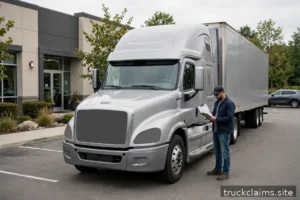
In the confusion after a truck accident, “who do I call first?” is the question that causes the most expensive mistakes. Call the wrong party first and you may give a recorded account before you understand your own coverage. Miss a required notice and you can hand an insurer a coverage defense it would not otherwise have. The good news is that the notification sequence is the same in almost every truck accident — it is just longer than the sequence for a car accident, because commercial trucking involves more contracts and more layers of insurance.
This guide gives you the complete notification checklist in priority order, explains why each notice exists, and flags the deadlines that actually matter. It covers first-party notices (your insurer, your broker), contractual notices (the motor carrier, the shipper or broker on the load), and regulatory notices (police, and in serious cases, federal authorities). Keep this page bookmarked — it is the one you will want open on your phone at the scene.
First: emergency services and the police
Before any insurance notice, call 911 if there are injuries, a blocked roadway, a hazmat spill, or any situation that is unsafe. This is not just common sense — it is the law in every state for accidents involving injury, death, or property damage above a threshold. The police report generated from this call becomes the foundational document of your claim: it records the time, location, parties, witness information, and the officer’s observations, all made within minutes of the event while memories are fresh.
Get the responding officer’s name, badge number, and the report number or the instructions for obtaining the report. In many jurisdictions the full report takes a week or more to become available, but the report number lets your adjuster pull it directly. If the accident involves a commercial vehicle, officers will typically note the DOT number and the carrier name — verify that information is correct before you leave the scene, because a wrong DOT number can send your claim paperwork to the wrong company and cost you weeks.
Second: your own insurance company
Your first insurance call goes to your own insurer — the company that issued the policy covering the truck. Most commercial policies require notice “as soon as practicable,” and courts have upheld coverage denials where notice was delayed without good reason. Call the claims number on your insurance card or declarations page, give the basic facts, get a claim number, and ask who your adjuster will be. You can read the full procedure in our step-by-step filing guide.
Keep this first call short and factual: date, time, location, vehicles involved, whether there were injuries, and where the truck is now. Do not speculate about fault, do not estimate repair costs, and do not agree to a recorded statement on this call — you can schedule that after you have gathered your documents. If you have multiple policies that could apply (for example, a bobtail policy and a motor carrier’s policy), notify each carrier; sorting out which policy is primary is the insurers’ job, and failing to notify one of them can forfeit coverage you paid for.
Third: your insurance broker or agent
If you bought your policy through a broker or agent, notify them the same day. Your broker is not just a salesperson — they are your advocate inside a process designed by insurers. A good broker will confirm that notice reached every carrier on your program, flag coverage issues early (like a driver who was not listed or a radius violation), and push the claim forward when it stalls. They also maintain your loss history, which affects your renewal pricing, so they need accurate information from the start.
Send your broker the same basic facts plus your claim number once you have it. Ask them to confirm in writing that all potentially applicable carriers have been placed on notice. This written confirmation matters more than most people realize: if a coverage dispute arises later about whether a particular insurer received timely notice, your broker’s file is the evidence that notice went out. Owner-operators leased to a carrier should also loop in the carrier’s insurance contact, because the carrier’s policy may respond first for liability while your non-trucking or bobtail policy sits in a different position.

Fourth: the motor carrier (if you drive for one)
If you operate under someone else’s motor carrier authority — as a leased owner-operator or a company driver — notify the carrier’s safety department immediately. Your lease agreement almost certainly requires prompt incident reporting, and the carrier has its own obligations: preserving the driver’s qualification file, pulling ELD data, conducting post-accident drug and alcohol testing where federal rules require it, and notifying its insurer. Federal regulations require post-accident testing in specific circumstances (a fatality, or a citation plus a tow-away or injury), and the testing window is short — hours, not days — so the carrier needs to know fast.
Follow the carrier’s reporting procedure exactly: most carriers have an accident reporting form or a 24-hour safety hotline. Fill out their form completely and keep a copy for yourself. Be aware that anything you write on the carrier’s form may be seen by the carrier’s insurer, so stick to facts. If you are the carrier — you hold your own authority — the same logic applies internally: your safety director needs to trigger the post-accident protocol, preserve records, and make the coverage notifications before evidence degrades.
Fifth: the shipper or broker (when cargo is involved)
When cargo is damaged, lost, or delayed, the shipper — or the freight broker who tendered the load — must be notified promptly, and this notice runs on the strictest clock in the entire claim ecosystem. Under the Carmack Amendment, which governs interstate motor carrier cargo liability, a written claim must generally be filed within nine months of delivery, and the bill of lading may set its own notice expectations even earlier. Shippers also need to mitigate: they may need to arrange salvage, transloading, or a replacement shipment, and they cannot do any of that if they learn about the loss a week late.
Notify the shipper or broker with the basic facts — what happened, where the freight is, and its apparent condition — and confirm whether they want the freight held, inspected, or moved. Do not admit liability for the cargo damage in this notice; describing what you observed is fine, characterizing who is at fault is not. Our cargo claims guide walks through the full cargo process, and the federal Carmack Amendment deadlines make early cargo notice critical.
What about the other driver’s insurer?
You are required to exchange basic information at the scene — names, contact details, insurance information, vehicle and registration details — and you should cooperate with a police investigation. Beyond that, you owe the other driver’s insurer nothing in the early stages. Do not give them a recorded statement, do not discuss your injuries or damage in detail, and do not accept a quick settlement offer before you understand the full extent of your losses. Their adjuster’s job is to minimize what their company pays you; being polite is fine, being forthcoming with strategy is not.
If the other driver was at fault and you intend to pursue a third-party claim against their policy, your own insurer or an attorney can handle that communication. There is a structured way to present a third-party claim — a demand package with documentation — and it is far more effective than a series of phone calls in the first week. The distinction between pursuing your own policy and pursuing someone else’s is explained in our guide to first-party vs. third-party truck claims.

Regulatory notices: when the government needs to know
Most routine accidents require no federal notification, but serious ones do. If the accident involves a fatality, an injury requiring immediate treatment away from the scene, or a hazmat release, additional reporting obligations can apply — including to the FMCSA in certain circumstances and to state environmental agencies for spills. Your carrier’s safety department should own these determinations, which is another reason the carrier notice must go out fast: the regulatory clock starts at the time of the incident, not when someone gets around to reading the regulations.
Keep a single master log of every notification: who was notified, when, by what method, the claim or reference number received, and the name of the person you spoke with. Email confirmations are ideal because they are self-documenting; for phone calls, follow up with a brief confirming email. This log becomes invaluable if a dispute arises months later about whether notice was timely — and in truck claims, that dispute arises more often than anyone expects. For the federal side of the regulatory picture, the Federal Motor Carrier Safety Administration publishes the safety regulations that drive post-accident requirements.
Frequently asked questions
What happens if I notify my insurer late?
Late notice can give the insurer a coverage defense, particularly if the delay prejudiced its ability to investigate — for example, if the truck was repaired before inspection or witnesses became unreachable. Most policies require notice “as soon as practicable,” so notify the same day whenever possible and document any reason for delay.
Do I have to notify my broker, or is the insurer enough?
Notify both. The insurer opens the claim; the broker protects your interests across all your policies, confirms every carrier was notified, and helps resolve coverage questions. The broker notification costs you one email and can save the claim.
Should I call the other driver’s insurance company at all?
Not in the early stages beyond exchanging required information at the scene. If you pursue a claim against their policy, do it through a structured demand later, ideally with professional guidance. Early informal statements to the adverse insurer rarely help you.
Who notifies the FMCSA after a serious truck accident?
The motor carrier is responsible for regulatory compliance, including any required federal or state reporting after serious accidents. If you are an owner-operator leased to a carrier, your prompt notice to the carrier is what enables them to meet those obligations on time.
The notification sequence after a truck accident is: emergency services, your own insurer, your broker, the motor carrier, and the shipper or broker if cargo is involved — with the other driver’s insurer deliberately last and limited to basic facts. Work through that list the same day, log everything in writing, and you will have protected both your coverage and your credibility before the adjuster even opens the file.