A decade ago, a truck insurance claim was decided by competing stories: your account against theirs, with the police report and the physical evidence filling in the gaps. In 2026, that world is fading. Forward-facing cameras, driver-facing cameras, and telematics platforms that record speed, braking, following distance, and location have moved from early-adopter technology to standard equipment across much of the industry — and claim investigations have been rebuilt around the data they produce. The question is no longer whether video and data will be part of your claim, but how.
This 2026 update explains how dashcams and telematics are actually being used in claim investigations right now: what the footage and data show, how adjusters and investigators work with them, what they mean for fault disputes and injury claims, and — most importantly — what you should do to make sure this technology helps your claim rather than hurting it. Whether you already run cameras or are considering them, this is the current state of play.
What changed: from stories to recordings
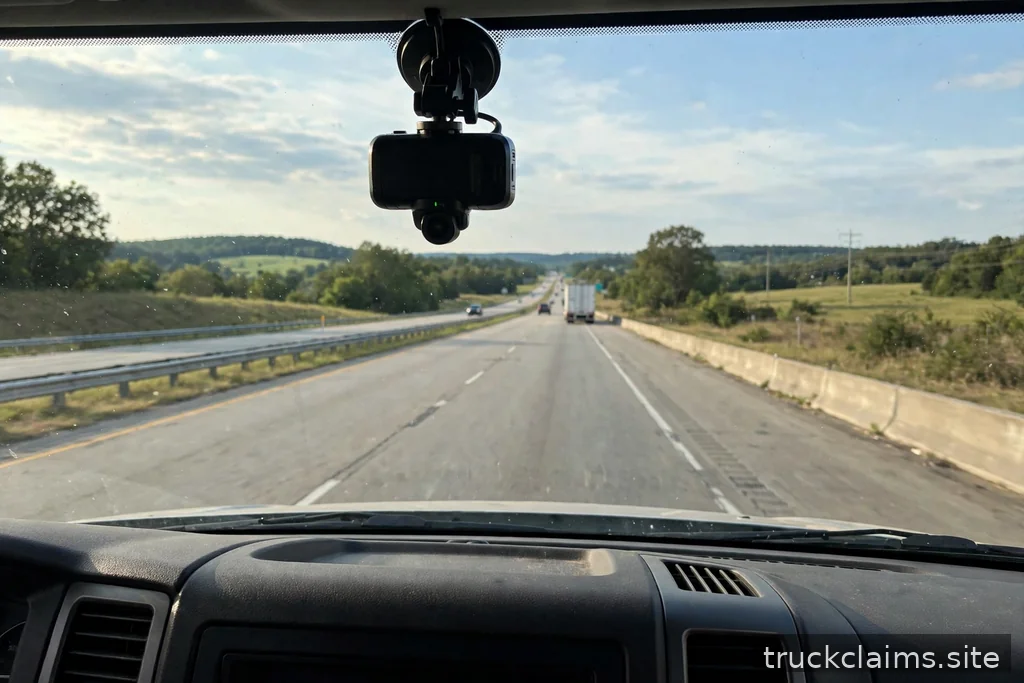
The fundamental shift is evidentiary. Before widespread cameras, fault disputes in truck accidents were resolved through inference: skid marks suggested speed, damage patterns suggested angles, witnesses offered conflicting accounts. Now, a forward-facing camera often shows the seconds before impact directly — the other vehicle crossing the center line, the sudden stop ahead, the traffic signal’s color. Telematics adds the quantitative layer: speed at impact, braking force, whether cruise control was engaged, how closely the truck was following. Together, they collapse the space for competing stories.
This has changed the rhythm of claims. Investigations that once took months of back-and-forth over fault now often resolve the liability question in days once footage is reviewed. Clear exonerating video — the car cutting off the truck, the pedestrian darting into the lane — can short-circuit disputes that would previously have consumed enormous time and legal expense. But the same technology that exonerates the careful also implicates the careless: footage is indifferent to whose side it helps, and claimants are sometimes surprised to learn that their own camera recorded something unhelpful.
How adjusters use footage and data now
In current practice, adjusters request camera footage and telematics data as a matter of routine in any claim with disputed facts or significant damages — not as an extraordinary measure. The footage goes through a structured review: the moments before the incident for causation, the incident itself for mechanics, and the aftermath for context. Telematics data is correlated with the video timeline: does the hard-braking event match the moment the hazard appeared? Does the speed data match the driver’s account? Investigators look for consistency across every source — video, data, ELD logs, physical evidence, statements — and inconsistencies become the focus of further investigation.
Driver-facing cameras add a behavioral dimension: was the driver looking at the road, wearing a seatbelt, showing signs of fatigue or distraction? This is the most sensitive aspect of the technology, and the one drivers resist most — but from the claim perspective, driver-facing footage showing an attentive, belted driver is powerful corroboration, while footage showing distraction is correspondingly damaging. Fleets adopting driver-facing cameras typically pair them with clear policies about when footage is reviewed, and drivers should understand those policies before an incident, not after. Our guide to electronic logging data covers the hours-of-service side of this same data picture.
What it means for fault disputes
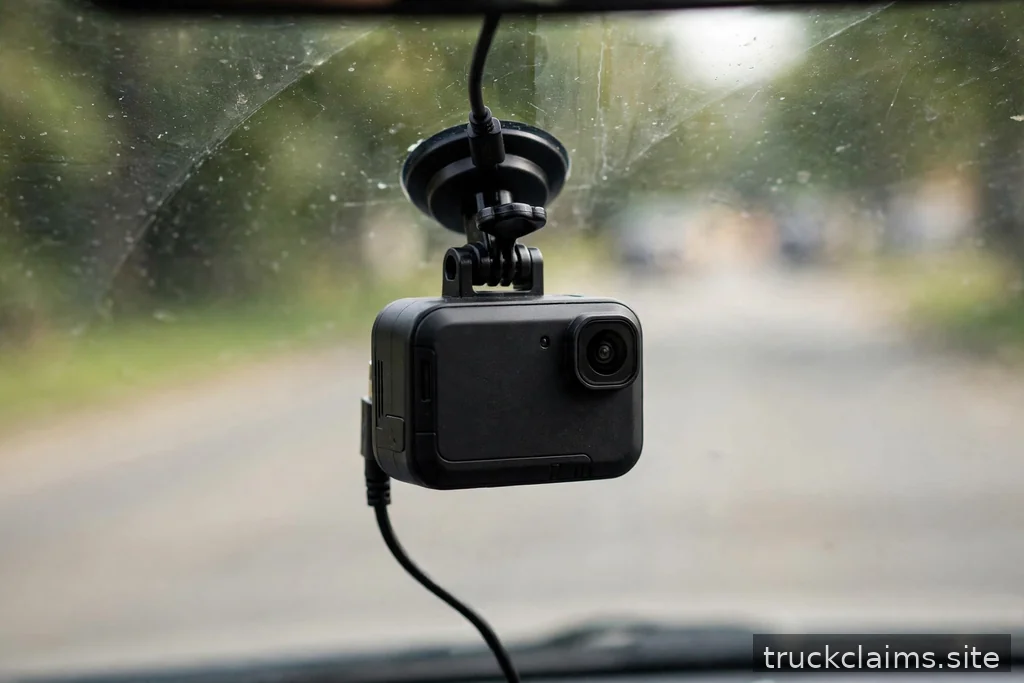
The clearest impact is on fault disputes, which video often resolves decisively. Lane-departure events, red-light running, unsafe merges, sudden stops — the maneuvers that cause most truck accidents are exactly what forward cameras capture best. When footage clearly shows the other party at fault, third-party claims accelerate dramatically: the adverse insurer, faced with video, typically moves to settlement far faster than it would on witness statements alone. Some disputes that would once have required litigation now settle in the claim phase because the video leaves nothing to litigate.
The effect is symmetric, though, and claimants need to understand both directions. If your camera shows your driver at fault — following too closely, distracted, speeding — that footage will shape your claim too, and no amount of argument overcomes a clear recording. This is why the honest assessment matters: review your footage early, understand what it shows, and calibrate your claim strategy to the evidence rather than to what you wish the evidence showed. A claim built on the actual facts, even unfavorable ones, resolves better than a claim built on a story the video contradicts.
Effects on injury and severity assessment
Beyond fault, cameras and telematics are increasingly used to assess the severity of impacts and, by extension, the plausibility of injury claims. Telematics data showing a low-speed impact with minimal braking force sits uneasily alongside claims of severe injury; conversely, data showing a high-energy impact corroborates serious injury claims. This is not determinative — low-speed impacts can cause real injuries, and medicine, not telematics, decides that — but it has become part of the evaluation, and claimants should expect it.
For injury claims specifically, this makes contemporaneous medical documentation more important, not less. When the data suggests a minor impact, the medical records must tell a clear, consistent story from the first treatment onward — gaps in treatment and delayed first visits are interpreted skeptically against a backdrop of data showing a minor event. The lesson is not that data defeats legitimate claims but that legitimate claims need the documentation to match the data. Prompt, consistent medical care and thorough records remain the foundation of any injury component.
Your 2026 playbook: cameras, data, and your claim
If you run cameras: preserve footage immediately after any incident — the same day, with backups — and understand your system’s retention and overwrite behavior before you need it. Know what your cameras record and who can access the footage. Review the footage yourself early so you understand what your claim’s key evidence shows. Provide exonerating footage to your adjuster proactively; it accelerates everything. And maintain the cameras — a camera that was not recording because nobody replaced a failed memory card is a missed opportunity that cannot be reconstructed.
If you do not run cameras: seriously consider it. The cost of a quality multi-channel dashcam system is trivial compared to the value of decisive evidence in a single disputed claim — many operators find that one exonerating video pays for a fleet’s worth of cameras. When evaluating systems, consider video quality (license plates must be readable), retention, reliability, and how footage is retrieved after an incident. And regardless of cameras, preserve your telematics and ELD data with the same discipline — our photo and video documentation guide covers the full evidence-preservation routine that cameras complement.
Privacy, policy, and the human side
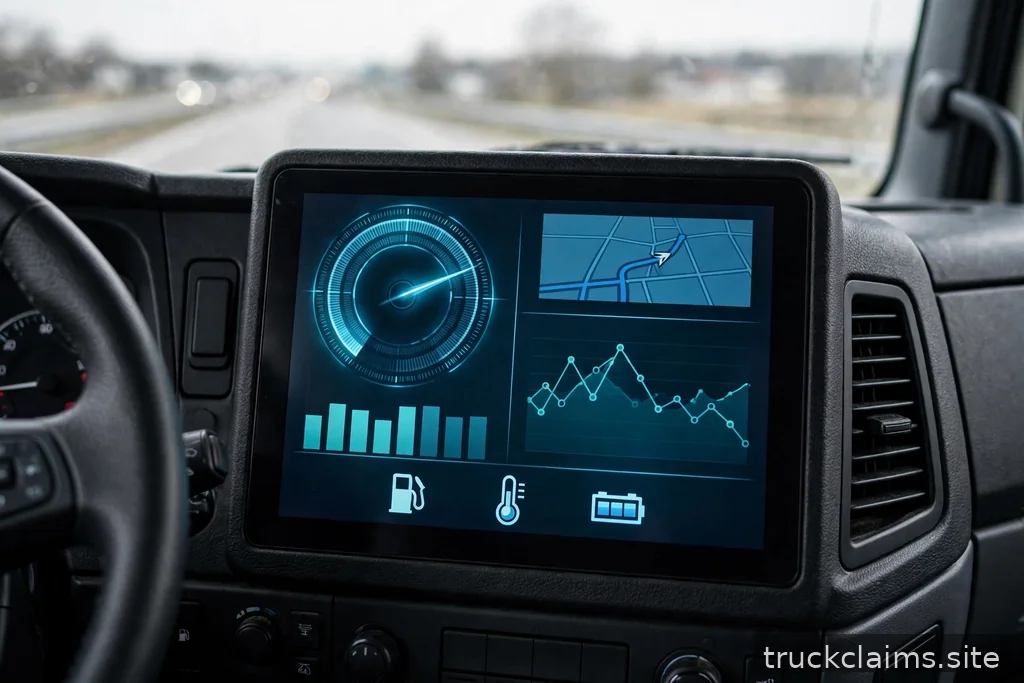
The spread of cameras and telematics raises legitimate concerns that claimants and drivers should think through in advance. Driver-facing cameras in particular implicate privacy, and the best fleets address this openly: clear written policies on what is recorded, when footage is reviewed, who can access it, and how long it is retained. Drivers who understand the policy — and who understand that the camera protects them when they drive well — accept the technology far more readily than drivers who discover its full scope during a claim investigation.
From the claim perspective, the key principle is consistency between your policies and your practice. If your written policy says driver-facing footage is reviewed only after safety events, but footage is actually reviewed routinely, that inconsistency becomes an issue if the claim ever reaches litigation. Keep your data practices honest, documented, and aligned with what you tell your drivers. The technology is now a permanent part of the claim landscape; the operators who thrive with it are the ones who manage it deliberately rather than discovering its implications mid-claim.
Frequently asked questions
Do I have to share my dashcam footage with the other driver’s insurer?
You generally must cooperate with your own insurer’s reasonable investigation. The adverse party typically obtains footage through formal legal process if the claim becomes disputed. Do not volunteer footage to the adverse insurer informally — but never delete or alter it, which can lead to spoliation sanctions far worse than any footage.
Can telematics data alone decide who was at fault?
It is powerful evidence but rarely the only evidence. Fault determinations consider video, data, physical evidence, witness accounts, and the applicable traffic laws together. Data that clearly shows one party’s violation, though, is often close to decisive in practice.
What if my camera wasn’t recording during the accident?
Document why — equipment failure, full storage, power issue — honestly and contemporaneously. A documented equipment problem is understandable; an undocumented gap invites suspicion. Then build your evidence from every other available source: ELD data, telematics, witnesses, physical evidence, and thorough photography.
Are driver-facing cameras legal?
In the commercial trucking context, inward-facing cameras installed by the fleet operator are generally permissible, though specific rules vary and union or employment agreements may impose requirements. The trend across the industry is toward acceptance paired with clear written policies. If you are a driver with concerns, raise them with your carrier before an incident, not during a claim.
Dashcams and telematics have changed truck claims from contests of memory into reviews of recordings — faster, more objective, and less forgiving of carelessness in either direction. Preserve your footage and data immediately, review it honestly, use it proactively when it helps, manage the privacy questions deliberately, and let the technology do what it does best: establish what actually happened. In 2026, the best claim strategy starts with the best evidence, and the best evidence is now electronic.